
Twice Exceptional: When Your Child Is Gifted AND Neurodivergent
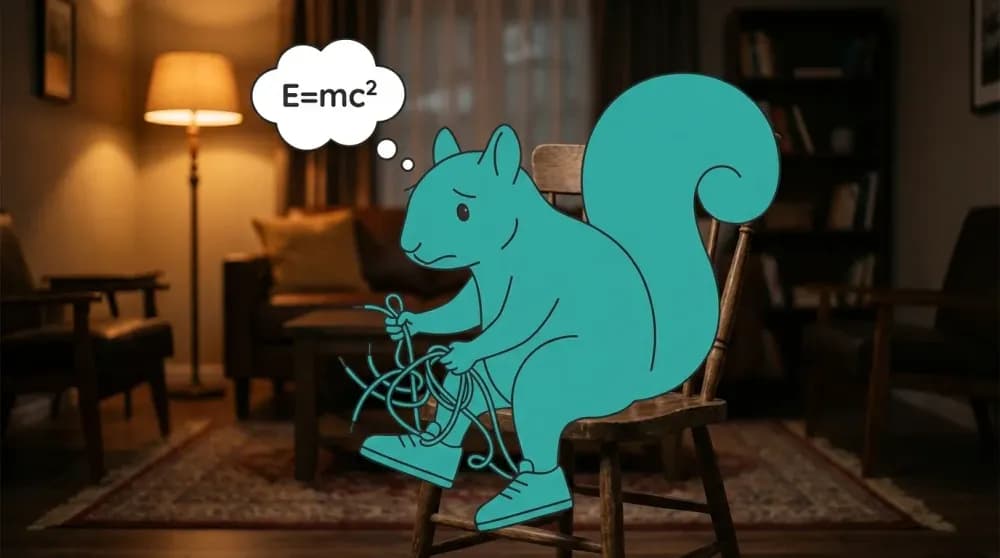
Twice exceptional children are gifted AND neurodivergent. Learn about asynchronous development, Dabrowski's overexcitabilities, and why your intense child needs both challenge and support.
He explains quantum mechanics concepts he absorbed from YouTube. He cannot write a paragraph about his weekend. He hyperfocuses on Minecraft redstone circuits for five hours straight, engineering logic gates that would impress a computer science professor. He cannot remember to put on shoes before walking out the door.
His report card says "brilliant but underperforming." You know that's code. You've known for a while that something doesn't add up — that your child is simultaneously the smartest kid in the room and the one who can't get through a morning routine without someone standing over him naming each step.
You're not imagining it. Both things are true at the same time.
Your child may be twice exceptional — gifted AND neurodivergent. And if nobody has used that term with you yet, this article is going to explain a lot. If you're already wondering whether the issue is giftedness, ADHD, or both, the answer may be "all of the above."
In brief: Twice exceptional (2e) children are both intellectually gifted and neurodivergent — ADHD, autism, dyslexia, or other learning differences. Their giftedness masks their disability, and their disability masks their giftedness, making identification extraordinarily difficult. Understanding 2e changes everything: it explains the confusing gap between what your child can clearly think and what they can actually produce, and it opens the door to support that addresses both sides simultaneously.
What Does Twice Exceptional Mean?
Twice exceptional — often shortened to 2e — describes children who are intellectually gifted AND have one or more neurodevelopmental differences: ADHD, autism, dyslexia, sensory processing differences, or other learning disabilities. Not gifted despite their challenges. Not challenged despite their gifts. Both, simultaneously, each shaping how the other shows up.
The concept sounds straightforward enough. The reality is anything but.
The Masking Problem
Here's what makes twice-exceptional identification so difficult: giftedness and disability mask each other. Parents of gifted underachievers often spend years wondering why a clearly brilliant child can't produce work that matches their ability.
A child with a verbal IQ in the 99th percentile can compensate for ADHD through sheer cognitive horsepower — until the demands outpace the compensation. This usually happens around middle school, when organizational requirements spike and the strategies that worked in elementary school (being smart enough to wing it) stop being enough. Parents describe it as "hitting a wall" or "falling off a cliff." It's neither. It's a compensation strategy reaching its limit.
Going the other direction, the disability can hide the giftedness. A child struggling with writing or processing speed gets categorized as "average" — the peaks and valleys in their cognitive profile average out to a misleadingly normal composite score. Nobody thinks to test for giftedness because the disability is all anyone sees.
And in the cruelest version: both mask each other so completely that the child appears ordinary. "He's fine. He's just not trying." He's not fine. He's working three times harder than anyone realizes to produce results that look unremarkable — and he's exhausted.
How Many Kids Are We Talking About?
The honest answer: we don't know, because the identification systems are too broken to count accurately.
The National Association for Gifted Children estimates that roughly 6% of K-12 students are gifted — about 3 million children in the U.S. Of those, an estimated 2-5% are also twice exceptional, putting the number somewhere around 360,000 students. But a 2024 study analyzing national education data found that approximately 1 in 9 students in gifted programs should be classified as 2e based on their achievement profiles — far more than current identification catches. The undercount is the story.
The Scatter Pattern: Asynchronous Development in Gifted Children
If you've ever had your child tested — or if you're considering it — this section will explain what the numbers mean and why the standard summary can be dangerously misleading.
A Formula 1 Car on a Dirt Road
The 2e brain is like a Formula 1 car being driven off-road. An F1 car is engineered for a specific track — smooth, banked, high-speed. On that track, it's the fastest thing alive. Put it on a dirt road with potholes and it doesn't just slow down — it can't function. The suspension bottoms out. The tires have no grip. The precision engineering that makes it fastest on the right surface makes it most vulnerable on the wrong one.
That's school for a 2e kid. The brain is high-performance — but the environment wasn't built for it. It's not a deficit. It's a terrain problem.
And that F1 car also has a compact car's gas tank. The engine is extraordinary — but the fuel supply (processing speed, working memory, executive function) runs out faster than the engine demands. The child can hyperfocus for hours on the right track, then crash after 20 minutes on the wrong one.
Psychologists call this asynchronous development: cognitive abilities that are years ahead of executive function and emotional maturity, all in the same child, all at the same time. The Columbus Group defined giftedness in 1991 as "asynchronous development in which advanced cognitive abilities and heightened intensity combine to create inner experiences and awareness that are qualitatively different from the norm." The key insight: this asynchrony increases with higher intellectual capacity. The more gifted the child, the wider the gap.
The Scatter Pattern: What the Test Scores Actually Show
The scatter pattern is the diagnostic signature of twice-exceptionality: wildly uneven subtest scores on cognitive testing, where peaks of giftedness and valleys of disability coexist in the same profile.
Research from the Gifted Development Center found that gifted children show an average gap of 27.4 points between their Verbal Comprehension score (131.7) and their Processing Speed score (104.3) on IQ testing. To put that in perspective: when index scores vary by 23 points or more, the Full Scale IQ score becomes statistically uninterpretable — it's like reporting a runner's "average speed" when they sprinted the first mile and crawled the second. The number is technically correct and practically meaningless.
What this looks like in daily life:
- 99th percentile verbal reasoning, 15th percentile processing speed. He can explain the concept. He cannot fill out the worksheet about it.
- Hyperfocus for hours on interests, can't sustain 10 minutes on assigned work. It's not motivation. It's a brain that runs on engagement fuel, not obligation fuel.
- Discusses philosophy at dinner, has a meltdown over putting on socks. The cognitive sophistication and the emotional regulation operate on completely different developmental timelines.
The more gifted the child, the more pronounced this asynchrony becomes. Parents describe their kids as "many ages at once" — a twelve-year-old with the reasoning of a twenty-year-old, the emotional reactivity of a six-year-old, and the executive function of an eight-year-old. That's not a parenting problem. That's asynchronous development, and it's documented extensively in the research literature.
A 2026 study by Gilman, Peters, and Silverman advocates for using strength-based assessment approaches instead of composite IQ scores — because the composite literally hides both the giftedness and the disability in 2e children.
Dabrowski's Overexcitabilities: When "Too Much" Is Actually a Capable Mind
If you've ever been told your child is "too intense," "too sensitive," "too much" — this section is for you.
Polish psychologist Kazimierz Dabrowski identified five forms of heightened intensity that he called overexcitabilities — innate tendencies to experience life more deeply, more vividly, and more acutely than the norm. These are not disorders. They are markers of developmental potential. And they are consistently found in gifted individuals.
The problem: every single one of them mimics a clinical diagnosis.
The Five Overexcitabilities
Psychomotor overexcitability looks like ADHD hyperactivity. Constant movement, rapid speech, physical energy that can't be contained. Tapping, fidgeting, needing to pace while thinking. The key distinction: psychomotor overexcitability often disappears during deep engagement. The child who can't sit still during math class is motionless for hours during a passion project. ADHD hyperactivity is more pervasive — but the two can also coexist, compounding each other.
Sensory overexcitability looks like Sensory Processing Disorder. Tags in shirts are unbearable. Certain textures trigger gagging. Loud environments become overwhelming. But the same child may be profoundly moved by music, notice visual details nobody else catches, or experience physical sensations with unusual intensity. The heightened sensitivity runs in both directions — pain and beauty amplified equally.
Emotional overexcitability looks like anxiety or a mood disorder. Intense reactions to perceived injustice. Deep empathy that absorbs other people's distress. Somatic complaints — stomachaches before school, headaches when overwhelmed. But also: profound compassion, a fierce connection to fairness, moral reasoning that's years ahead of their age, and an emotional depth that, when it's not being pathologized, is extraordinary.
Intellectual overexcitability looks like ADHD hyperfocus or autistic special interests. Relentless questioning — "but why?" until every adult in the room has run out of patience. Obsessive deep-dives into topics that fascinate them. A flat refusal to engage with material they find intellectually beneath them. This isn't avoidance. It's a brain that runs on genuine intellectual hunger and cannot fake engagement any more than you can fake hunger.
Imaginational overexcitability looks like ADHD inattention. Daydreaming. Vivid inner worlds. "Not paying attention" in class — except the child was paying attention to the elaborate scenario unfolding in their head, which was more engaging than the lesson. Rich creative capacity, original thinking, the ability to generate ideas that nobody else in the room has considered. The same trait that gets checked as "off-task" on a behavior chart.
These Are Not Mutually Exclusive
Here's what the literature makes clear and the diagnostic system often misses: a child can have genuine ADHD AND genuine intellectual overexcitability. They can be autistic AND emotionally overexcitable. The overexcitabilities don't replace the diagnosis — they compound it. A 2e child with ADHD and psychomotor overexcitability doesn't just have one source of restlessness. They have two, layered on top of each other, and the intervention needs to address both.
"Living with Intensity" by Daniels and Piechowski (2009) remains the essential reference for understanding these patterns. If you read one book after this article, make it that one.
The Diagnostic Journey: From "Gifted but Struggling" to Answers
Most parents of 2e children can trace their search back to a single, persistent instinct: something doesn't add up.
What Parents Search For: Is My Child Gifted or ADHD?
The journey typically starts not with clinical terms but with descriptions of what they're seeing:
- "My child is smart but lazy"
- "Bright kid can't write"
- "Gifted child failing school"
- "Is my child gifted or ADHD"
That last search — "is my child gifted or ADHD" — is the turning point. It's the moment a parent discovers that the answer might be "both." From there, the path leads to "twice exceptional," to "neuropsychological evaluation," and eventually to the testing that reveals the full picture.
The average time from a parent's first concern to a neurodevelopmental diagnosis is 3.5 years (Crane et al., 2016). For 2e children, it's often longer — because the giftedness keeps the compensation strategy running just long enough to delay the crisis.
Why It Gets Missed
Teachers miss it because they were trained in behavior management and differentiated instruction — neither framework accounts for a child who is simultaneously gifted and disabled. "He's too smart to have ADHD" is still something parents hear from professionals who should know better. Pediatricians miss it because a bright, verbal child who makes eye contact and answers questions cleverly doesn't match their mental model of ADHD or autism.
The information to identify these children exists. Dabrowski's framework is 60 years old. Temple Grandin's work is widely accessible. The Davidson Institute publishes free resources. But teacher education programs don't include this material. Professional development rarely prioritizes it. And the culture of education still treats giftedness and disability as separate, mutually exclusive categories.
What the Neuropsychological Evaluation Reveals
If you pursue comprehensive testing — a neuropsychological evaluation — the 2e profile has a distinctive signature: wildly uneven subtest scores. High verbal comprehension, high fluid reasoning, and a processing speed score that looks like it belongs to a different child. That scatter pattern is the fingerprint of twice-exceptionality, and it explains everything the report card couldn't.
The evaluation also maps executive function — the cognitive infrastructure for planning, initiating, organizing, and shifting between tasks. In 2e children, executive function consistently lags behind intellectual ability. The brain can think at extraordinary levels. It struggles to manage that thinking in the structured way schools and workplaces demand.
If you're considering testing, the specific thing to ask for is a full neuropsychological evaluation, not just an IQ test. You want the subtest scatter, the processing speed profile, and the executive function assessment. That's what reveals the 2e pattern.
Finding a Neuropsychologist: The Key to the Lock
This evaluation is the cornerstone. Without it, you have observations and instincts. With it, you have data — the kind of data that unlocks IEPs, 504 plans, gifted program access, therapeutic interventions, and accommodations that can fundamentally change your child's school experience. It is, in the most literal sense, the key to the lock of educational resources.
How to find a pediatric neuropsychologist:
- ABPP Directory — The American Board of Professional Psychology certifies specialists in clinical neuropsychology, including a Pediatric Clinical Neuropsychology subspecialty. Board certification (ABPP-CN) is the highest credential in the field. Search by location and specialty.
- AACN Directory — The American Academy of Clinical Neuropsychology maintains a searchable directory of board-certified clinical neuropsychologists. Filter for pediatric specialists.
- ABCN (American Board of Clinical Neuropsychology) — The specialty board that certifies clinical neuropsychologists. Their website explains what board certification means and why it matters for your child's evaluation.
- Psychology Today "Neuropsych Testing" Directory — A broader directory that includes non-board-certified providers. Cast a wider net here, but verify credentials.
- Your child's pediatrician — Ask for a referral specifically to a pediatric neuropsychologist, not a general psychologist. The distinction matters: a neuropsych evaluation is comprehensive (6-10 hours of testing across multiple domains), while standard psychological testing is narrower.
- Davidson Institute's 2e Resource Guide — Guidance on what to look for in an evaluator who understands twice-exceptionality specifically. Not all neuropsychologists are 2e-literate.
What to ask a potential evaluator:
- "Do you have experience with twice-exceptional children?" (If they haven't heard the term, keep looking.)
- "Will the evaluation include a full cognitive profile with subtest analysis, not just a composite IQ score?"
- "Do you assess executive function separately?"
- "Will the report include specific recommendations for both accommodations and enrichment?"
What to expect: A full neuropsychological evaluation typically involves 6-10 hours of testing across multiple sessions, costs $2,000-$6,000 (often not covered by insurance), and produces a detailed report that becomes the foundation for every educational and therapeutic intervention that follows. It's expensive. It's worth it. It's the document that changes "we think something's going on" into "here's exactly what's happening and here's what to do about it."
School and the Twice-Exceptional Child: The GATE Gap
GATE (Gifted and Talented Education) is the primary model most U.S. school districts use for gifted students — a pull-out enrichment program that supplements regular classroom placement, typically a few hours per week.
There is no federal mandate for gifted education in the United States. Only four states — Colorado, Minnesota, Tennessee, and West Virginia — specifically address twice-exceptional students in their identification practices. Your child's access to appropriate education depends almost entirely on where you live and how hard you fight.
Why GATE Falls Short
GATE (Gifted and Talented Education) is what most school districts offer now, and it's a fundamentally different thing from the dedicated gifted programs it replaced. A dedicated gifted program provides a different learning environment — different pacing, different depth, different expectations, different peer group. GATE is a pull-out: a few hours per week of enrichment activities bolted onto a regular classroom placement, then back to the standard curriculum for the other thirty hours.
For a 2e child, the distinction is critical. A dedicated gifted program — with teachers trained in giftedness, a peer group of intellectual equals, and a curriculum built for depth — can be transformative. It's the right track for the F1 car. GATE, by contrast, is a scenic detour that drops the child back onto the dirt road every afternoon. The intellectual stimulation is real but fragmented, and it does nothing to address the executive dysfunction that makes the regular classroom unbearable.
And even GATE teachers often don't receive sufficient training in 2e identification. They're trained to nurture giftedness — not to recognize giftedness hiding behind a processing speed deficit, or to distinguish intellectual overexcitability from ADHD, or to understand why a child can build astonishing things during enrichment time but can't complete a five-paragraph essay in the regular classroom. The very educators tasked with serving gifted students frequently don't have the training to see the ones who need them most.
Worse, GATE identification often uses composite IQ scores or achievement tests that systematically exclude 2e children. When your child's Full Scale IQ is artificially depressed by the scatter pattern, they may not qualify for the gifted program they desperately need — because the testing instrument hides their giftedness behind their disability.
The IEP Paradox
A 2e child needs both accommodations for their disability AND enrichment for their giftedness. Most schools can only think in one mode. The IEP focuses on remediating weaknesses. The gifted program focuses on nurturing strengths. Nobody has a plan for doing both simultaneously.
The legal reality: children with disabilities cannot legally be denied access to gifted programs. A child can have an IEP, a 504 plan, and participate in gifted services at the same time. But knowing the law and getting the school to implement it are two very different things — as every parent who's sat through an IEP meeting already knows.
What to advocate for: accommodations that address executive function (extended time, reduced written output, preferential seating, access to technology) combined with intellectual enrichment that respects the child's depth (independent projects, mentorship, access to advanced content). Not either/or. Both.
Alternatives That Work
If the school can't or won't do both — and many can't — alternatives exist, and the landscape is better than it was even five years ago.
Dedicated 2e schools like Bridges Academy (Los Angeles, Seattle, and online) are purpose-built for twice-exceptional learners. These schools combine college-prep academics with built-in executive function support, small class sizes, and teachers trained to see both the giftedness and the challenges simultaneously. Davidson Academy (Reno, NV and online) serves profoundly gifted students — it's free, public, and one of the few schools in the country where being intellectually intense is the norm, not the exception.
Personalized learning schools take a different approach: instead of a specialized 2e curriculum, they individualize instruction for every student. Fusion Academy operates 80+ campuses nationwide with a 1-to-1 teaching model — one teacher, one student, every class. For a 2e kid, this eliminates the core environmental mismatch: no waiting for 28 other students, no one-size-fits-all pacing, no social performance pressure during learning. The teacher adapts to how the student's brain works, not the other way around. Fusion explicitly serves gifted and 2e students and frames neurodivergence as an asset.
Charter schools with flexible models — project-based learning, mastery-based progression, multi-age groupings — can work well for 2e students even without a specific 2e designation. The key is instructional flexibility: does the school allow a child to work at a 10th-grade level in math and a 6th-grade level in writing simultaneously? If yes, it might be a fit.
Education Savings Accounts (ESAs) are changing access to these alternatives. ESA programs route state education funding into parent-controlled accounts that can be used for private school tuition, tutoring, specialized therapies, educational technology, and other approved expenses. As of 2026, multiple states offer ESA programs, with Texas launching a $1 billion program for the 2026-27 school year — notably providing up to $30,000 for students with IEPs, with IEP students receiving first priority. If your child has a neuropsych evaluation and an IEP, ESA programs can make specialized schools financially accessible in ways they weren't before.
Micro-schools and hybrid homeschool co-ops are the fastest-growing segment — small, flexible learning communities that combine in-person instruction with independent work. For 2e families, these offer the holy grail: intellectual peers, flexible pacing, and the ability to integrate therapies and executive function support directly into the school day.
What Helps: Executive Function Support for Twice-Exceptional Families
Generic ADHD tools fall short for 2e kids because they address the executive dysfunction without respecting the intellect. A 2e child who's told to "use a checklist" for their morning routine will spend twenty minutes redesigning the checklist because the original one was poorly organized — and then miss the bus. The tool has to meet the brain where it is: sophisticated, intense, and deeply resistant to being patronized.
Executive Function Tools That Actually Work for 2e Kids
Executive function tools that respect intelligence. The goal isn't to simplify the world for the child — it's to make the invisible visible. Time blindness is one of the most universal 2e challenges: a brain that can think for hours about a problem but cannot feel that three of those hours have passed. Time awareness tools — not time limits, not punitive cutoffs, but gentle visibility into where time is going — allow the child to make their own decisions with real data. That's executive function scaffolding that builds independence instead of dependence.
Therapist collaboration with 2e literacy. Not every OT or therapist understands twice-exceptionality. The right provider knows that this child needs both challenge and support, that "behavior problems" may be overexcitabilities, and that the gap between capability and output is neurological, not motivational. Ask potential therapists: "Do you have experience with twice-exceptional children?" The answer tells you everything. Learn about Squirrel's clinical portal for therapists working with 2e families.
Family-wide tools, not child-only fixes. In most 2e families, the whole household is neurodivergent — the child didn't get these traits from nowhere. Tools that work for the 2e child often work for the parents too. Shared time awareness, shared executive function scaffolding, shared language for what's happening in the brain. The family system matters more than the individual intervention. See how Squirrel supports the whole family with shared executive function scaffolding.
Strength-based approach always. Start with what the child can do, not what they can't. Use their intellectual interests as the on-ramp to building executive function skills. A child who can't organize a five-paragraph essay but can architect a Minecraft city has organizational skills — they just haven't transferred to the school context yet. Meet them on their track first, then gradually introduce new terrain.
Resources & Community
You don't have to figure this out alone. The 2e community is small but deeply connected, and the resources are better than they've ever been.
Organizations:
- Davidson Institute — Family programs, community forums, scholarships, the gold-standard 2e guidebook
- SENG (Supporting Emotional Needs of the Gifted) — Parent support groups, conferences, webinars focused on the emotional experience of giftedness
- NAGC (National Association for Gifted Children) — Advocacy, policy, position statements on twice-exceptionality
- 2eNews — News, research updates, and practical resources for 2e families
Books:
- Living with Intensity — Daniels & Piechowski (2009). The essential guide to Dabrowski's overexcitabilities.
- Different Minds — Deirdre Lovecky. Gifted children with ADHD, ASD, and other dual exceptionalities.
- Misdiagnosis and Dual Diagnoses of Gifted Children and Adults — Webb et al. Why gifted traits get labeled as disorders.
Frequently Asked Questions About Twice-Exceptional Children
What does twice exceptional mean?
Twice exceptional (2e) describes children who are intellectually gifted AND have one or more neurodevelopmental differences such as ADHD, autism, dyslexia, or sensory processing differences. The term refers to both exceptionalities existing simultaneously — the child is exceptional in their cognitive abilities and exceptional in their learning challenges. Neither cancels out the other.
Can a child be gifted and have ADHD?
Yes. Giftedness and ADHD are not mutually exclusive — they co-occur more frequently than most diagnostic systems account for. A child can have a verbal IQ in the 99th percentile and genuine ADHD that impairs executive function, attention regulation, and time perception. The two interact in complex ways: giftedness can mask ADHD symptoms through cognitive compensation, while ADHD can mask giftedness by suppressing academic output. This is exactly why comprehensive neuropsychological testing — not just an IQ test or a behavior checklist — is essential for accurate identification.
What is asynchronous development in gifted children?
Asynchronous development means different aspects of a child's development progress at very different rates. A gifted child might reason like a twenty-year-old, regulate emotions like a six-year-old, and manage executive function tasks like an eight-year-old — all at age twelve. The more gifted the child, the more pronounced this asynchrony typically becomes. It's not a parenting failure or a character flaw — it's a documented neurological pattern where advanced cognitive development outpaces emotional, social, and executive function maturity.
What are Dabrowski's overexcitabilities?
Dabrowski's overexcitabilities are five forms of heightened intensity commonly found in gifted individuals: psychomotor (physical energy, restlessness), sensory (heightened sensitivity to stimuli), emotional (intense emotional responses, deep empathy), intellectual (relentless curiosity, need to understand), and imaginational (vivid inner world, creative thinking). Each one can mimic a clinical diagnosis — psychomotor overexcitability looks like ADHD, sensory looks like SPD, emotional looks like anxiety. They are not disorders but markers of developmental potential, described by Polish psychologist Kazimierz Dabrowski in his Theory of Positive Disintegration.
What is GATE and why might it not work for 2e kids?
GATE (Gifted and Talented Education) is a pull-out enrichment program offered by most U.S. school districts — typically a few hours per week of advanced activities, then back to the regular classroom. For some twice-exceptional children, GATE may fall short because it provides intellectual stimulation without addressing executive function challenges, and the regular classroom environment remains the primary placement. A dedicated gifted program or personalized learning school that adapts to the child's full profile — both the giftedness and the disability — may be a better fit.
When should I get a neuropsychological evaluation for my child?
Consider a neuropsychological evaluation if your child shows a significant gap between what they can clearly understand or explain and what they can produce on paper; if they're "bright but struggling" and nobody can explain why; if they compensated through elementary school but are now hitting a wall; if their behavior at school doesn't match what you see at home during activities they choose; or if you've been told "they're too smart to have ADHD" or "they just need to try harder." A full neuropsych evaluation (6-10 hours, $2,000-$6,000) reveals the subtest scatter pattern and executive function profile that identifies twice-exceptionality — and it becomes the foundation document for every accommodation and intervention that follows.
References
Twice-Exceptionality: Definition & Prevalence
- Davidson Institute (2024). "Twice Exceptional: Definition, Characteristics & Identification."
- Reis, S.M. & McCoach, D.B. (2000). "The Underachievement of Gifted Students: What Do We Know and Where Do We Go?" Gifted Child Quarterly, 44(3), 152-170.
- Beretta, V. & Pfeiffer, S.I. (2024). "Prevalence of Twice-Exceptional Students." Education Sciences, 14(10), 1048.
- Child Mind Institute. "Twice-Exceptional Kids: Both Gifted and Challenged."
Asynchronous Development & Testing
- Columbus Group (1991). Definition of giftedness as asynchronous development.
- Gilman, B.J., Peters, D.B., & Silverman, L.K. (2026). "Strength-Based Assessment for Twice-Exceptional Children." SAGE Open.
- Gifted Development Center. WISC-V score patterns in gifted children — 27.4-point average gap between Verbal Comprehension and Processing Speed.
- Silverman, L.K. (1997). "The Construct of Asynchronous Development." Peabody Journal of Education, 72(3&4), 36-58.
Dabrowski's Overexcitabilities
- Daniels, S. & Piechowski, M.M. (2009). Living with Intensity: Understanding the Sensitivity, Excitability, and Emotional Development of Gifted Children, Adolescents, and Adults. Great Potential Press.
- SENG. "Overexcitability and the Gifted."
- Piechowski, M.M. & Wells, C.L. (2021). "Reexamining Overexcitability: A Framework for Understanding."
Diagnostic Journey
- Crane, L. et al. (2016). "Experiences of Autism Diagnosis: A Survey of over 1000 Parents in the United Kingdom." Autism, 20(2), 153-162. [3.5-year average from first concern to diagnosis]
- Webb, J.T. et al. (2016). Misdiagnosis and Dual Diagnoses of Gifted Children and Adults. Great Potential Press.
School & Gifted Education
- Davidson Institute. "Clarification of Federal Law as It Applies to Twice-Exceptional Students."
- National Association for Gifted Children. "Twice Exceptionality" — position statements and resources.
- Davidson Institute. "Twice-Exceptional Schools: Understanding the Characteristics & Benefits."
- Fusion Academy. "Programs for Gifted and Twice-Exceptional (2E) Students." [1-to-1 personalized learning, 80+ campuses]
- Fusion Academy. "Best 2e Schools in the USA (2026)."
- EdChoice. "What is an Education Savings Account (ESA)?"
- EdChoice. "Texas Education Savings Account Program." [$1 billion program launching 2026-27, up to $30,000 for IEP students]
Giftedness, ADHD & Autism Overlap
- Davidson Institute. "Gifted, ADHD, or Both?"
- Davidson Institute. "Gifted, On the Spectrum, or Both?"
- CHADD. "Giftedness & ADHD: A Strengths-Based Perspective and Approach."
- ADDitude Magazine. "What Does Twice Exceptional Mean? Identifying and Nurturing Gifted Children with ADHD."
- Lovecky, D.V. Different Minds: Gifted Children with ADHD, ASD, and Other Dual Exceptionalities. Jessica Kingsley Publishers.
Neuropsychological Evaluation Resources
- ABPP Directory — Board-certified neuropsychologists searchable by specialty and location.
- AACN Directory — American Academy of Clinical Neuropsychology provider search.
- ABCN — American Board of Clinical Neuropsychology certification information.
Topics
Why we wrote this
We didn’t write this article because we researched a market opportunity. We wrote it because we lived it — the years of “he’s just not trying,” the neuropsych evaluation that finally explained everything, the domain-by-domain work of helping a neurodivergent child build the executive function scaffolding that school never provided.
Then we built Squirrel — an executive function platform designed from the inside — because the gaps in executive function aren’t just about missed homework and lost shoes. They’re the root of the social isolation, the emotional dysregulation, and the slow erosion of confidence that neurodivergent people carry long after childhood. We built the tool we wished we’d had.
Join the Beta